
If you’ve ever watched someone create a soft scarf or a tiny heart out of yarn and thought “I wish I could do that,” you’re in the right place. Learning how to crochet is one of those quiet skills that fits perfectly into European life – rainy afternoons in Berlin, cosy evenings in a Stockholm flat, or slow Sunday mornings in a Lisbon kitchen with a cup of tea. You don’t need fancy equipment or years of practice. You just need a hook, some yarn, and a little patience.
This guide walks you through everything a complete beginner needs. We’ll cover the basics at a gentle pace, teach you the core stitches, show you how to make small hearts and a simple baby blanket, and answer the questions people actually search for. No rushing. No pressure. Just clear steps you can follow at your own speed.
How to Crochet: Starting with the Right Mindset and Tools
The first step in how to crochet is simply deciding to begin. Many people overthink the supplies. You only need three things to start:
- A crochet hook (size 4 mm or 5 mm is perfect for beginners)
- Smooth, medium-weight yarn in a light colour so you can see your stitches
- A pair of scissors and a yarn needle for finishing
Choose yarn that feels nice in your hands. In Europe you’ll find excellent options in any hobby shop or online – look for cotton or soft acrylic that doesn’t split easily. Hold the hook the way that feels natural. Some people hold it like a knife, others like a pencil. Both are fine. The yarn usually sits in your non-dominant hand, gently controlled by your fingers so the tension stays even but never tight.
Sit somewhere comfortable. Put on a podcast or soft music. The goal is not perfection on day one. The goal is to make loops that look roughly the same size. That is how to crochet at its simplest.
How to Crochet Slow: Finding a Rhythm That Feels Good
One of the biggest secrets of how to crochet slow is understanding that speed is not the point. In fact, going slowly is the fastest way to learn. When you rush, your stitches become uneven, your hands tense up, and frustration creeps in.
Try this: set a timer for fifteen minutes and crochet as if you have all the time in the world. Feel the yarn slide through your fingers. Count each stitch out loud if it helps. Notice how the fabric grows under your hands. Many European crocheters treat the craft as a form of slow living – the same spirit as baking sourdough or tending a balcony herb garden. Your tension will improve naturally when you stop chasing speed. The more relaxed you are, the more even your work becomes.

How to Crochet a Chain, How to Chain in Crochet, and How to Chain Stitch on Crochet
Every project begins with a chain. Learning how to crochet a chain (also called how to chain in crochet or how to chain stitch on crochet) is the foundation of almost everything else.
- Make a slip knot and place it on your hook.
- Yarn over (bring the yarn from back to front over the hook).
- Pull that yarn through the loop already on your hook.
- Repeat. Each time you pull through, you create one chain stitch.
Keep the chains loose enough that you can easily insert your hook into them later. A common beginner mistake is making the chain too tight. If that happens, simply start again – yarn is forgiving. Practise making a long chain of thirty or forty stitches until it feels automatic. This simple row of loops is the starting point for scarves, blankets, hearts, and almost every pattern you will ever try.
How to Single Crochet
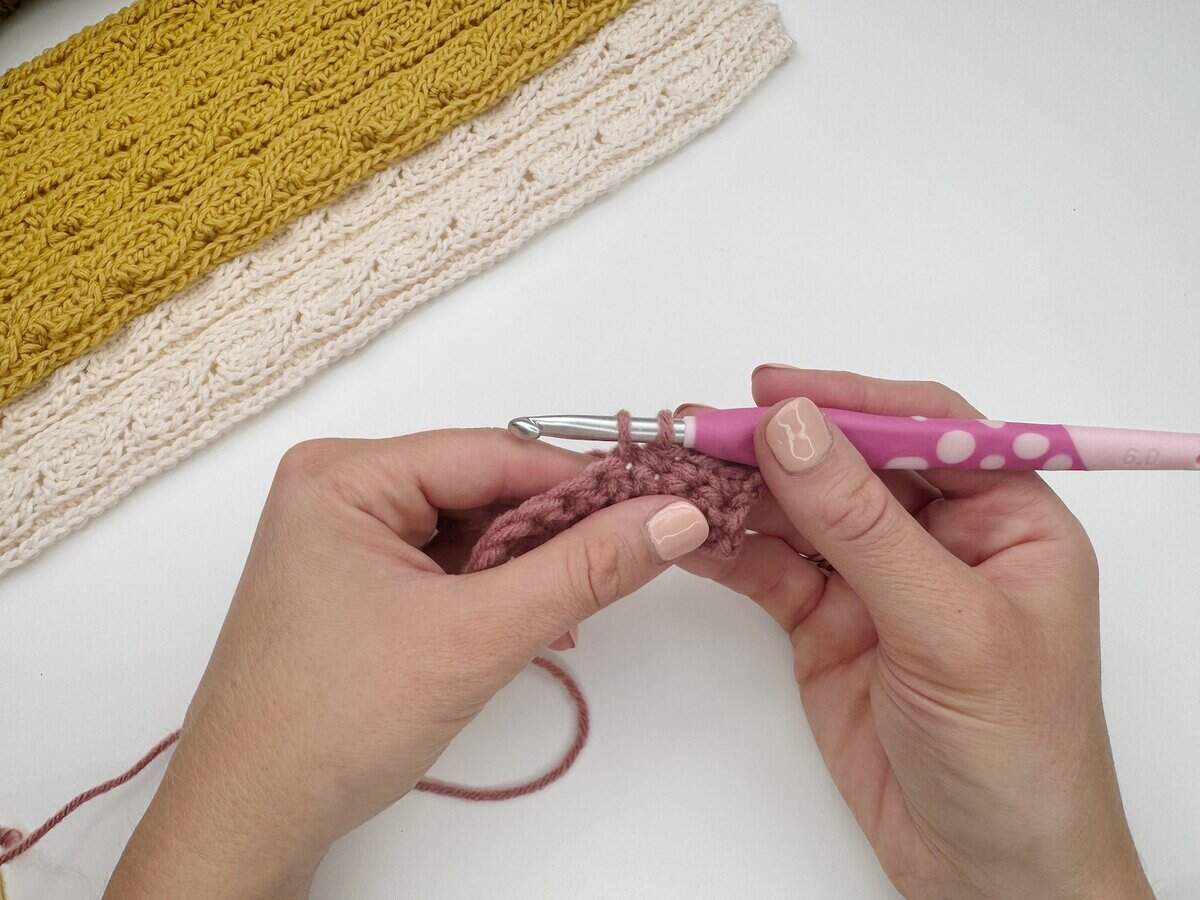
Once you have a chain, you can learn how to single crochet. This is the shortest, densest basic stitch and perfect for amigurumi, coasters, or firm fabric.
Insert your hook into the second chain from the hook. Yarn over and pull up a loop (you now have two loops on the hook). Yarn over again and pull through both loops. That is one single crochet. Continue across the row. At the end, chain one and turn your work to start the next row.
Single crochet creates a solid fabric that holds its shape well. It is also the stitch most often used when people ask how to crochet little hearts or small decorative pieces.
How to Double Crochet
How to double crochet is the next natural step. This stitch is taller and creates a softer, more open fabric – ideal for blankets and scarves.
Yarn over first, then insert the hook into the stitch. Yarn over and pull up a loop (three loops on the hook). Yarn over and pull through the first two loops. Yarn over again and pull through the remaining two loops. That is one double crochet.
Because double crochet is taller, projects grow faster. Many European makers use it for lightweight summer cardigans or airy baby blankets. Practise a few rows until the motion becomes smooth.
How to Crochet a Half Double
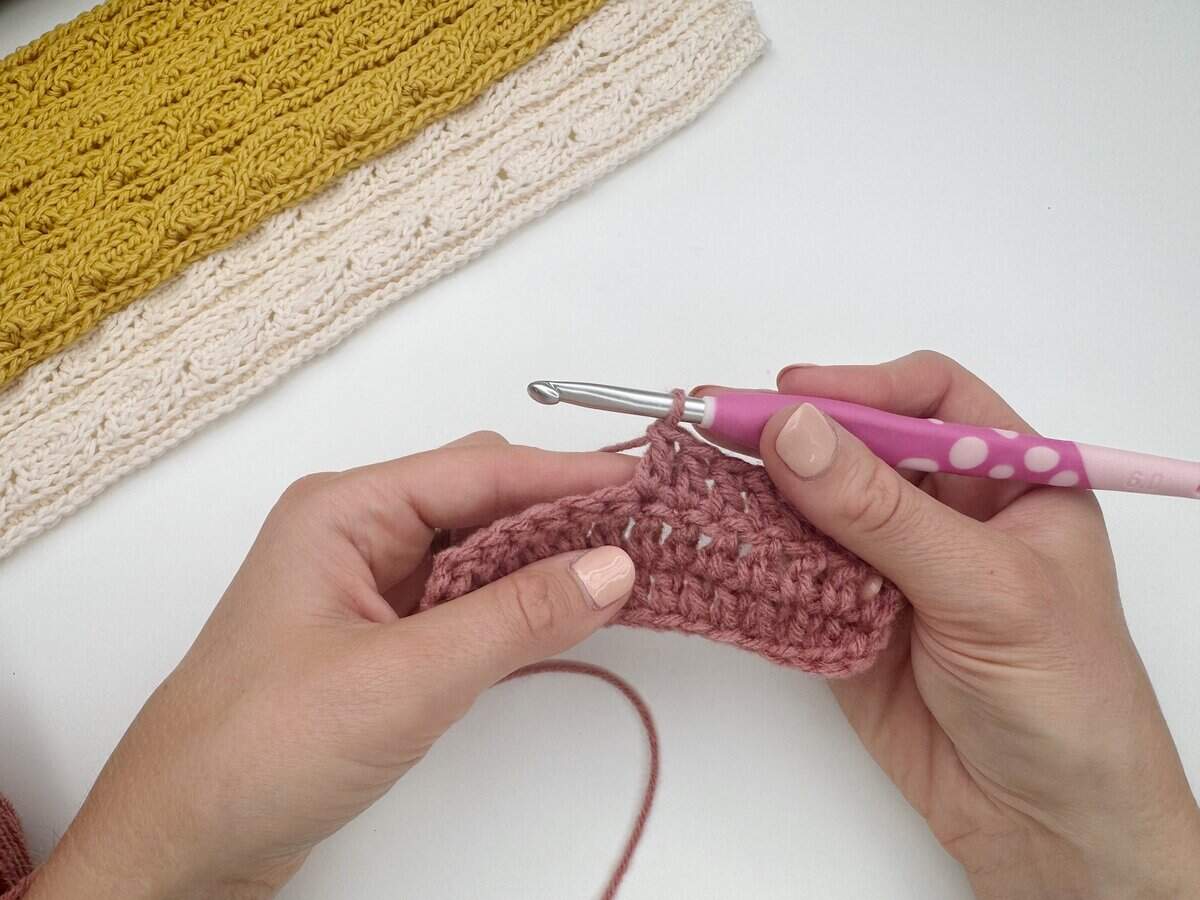
How to crochet a half double sits right between single and double crochet in height. It gives a lovely texture that is still quite solid.
Yarn over, insert the hook, yarn over and pull up a loop (three loops on the hook). Yarn over once more and pull through all three loops at once. That’s it.
Half double crochet is wonderful for beanies, dishcloths, and any project where you want a bit more drape than single crochet but more structure than double crochet. Many beginners fall in love with this stitch because it feels efficient and looks polished even when your tension is still developing.

How to Crochet Magic Ring and How to Crochet Magic Circle
When you want to start a project in the round (think amigurumi animals, hats, or circular coasters), you need a clean centre. That is where how to crochet magic ring (also called how to crochet magic circle) comes in.
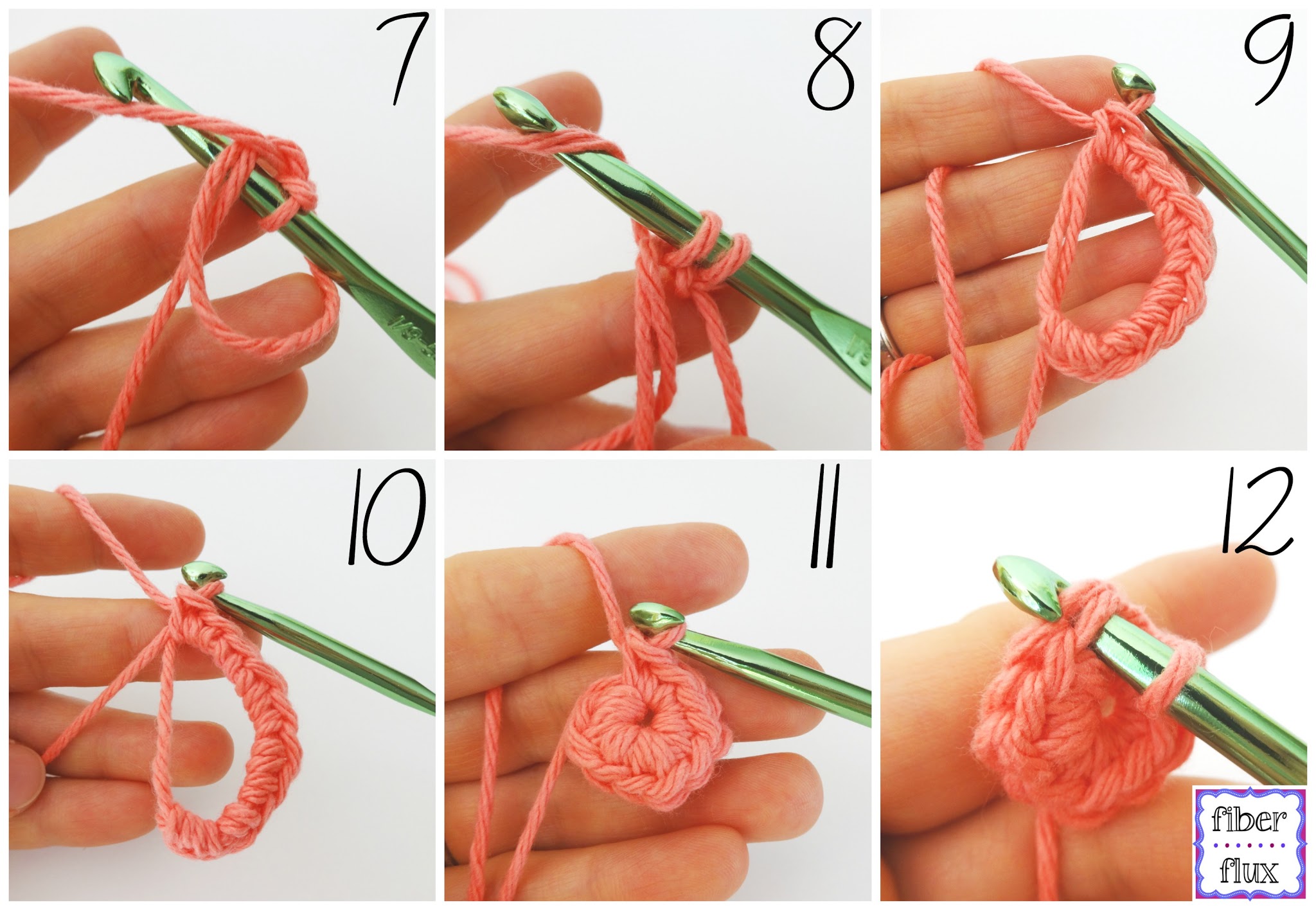
Wrap the yarn around your fingers to form a loop, insert the hook under the loop, yarn over and pull up a loop, then chain one. Work your first round of stitches into the big loop. When you have finished the round, pull the short tail firmly and the centre closes like magic – no hole left behind.
It takes a few tries to get the tension right, but once you master the magic ring you will use it constantly. Practise with a light-coloured yarn so you can clearly see what is happening.
How to Crochet in the Round
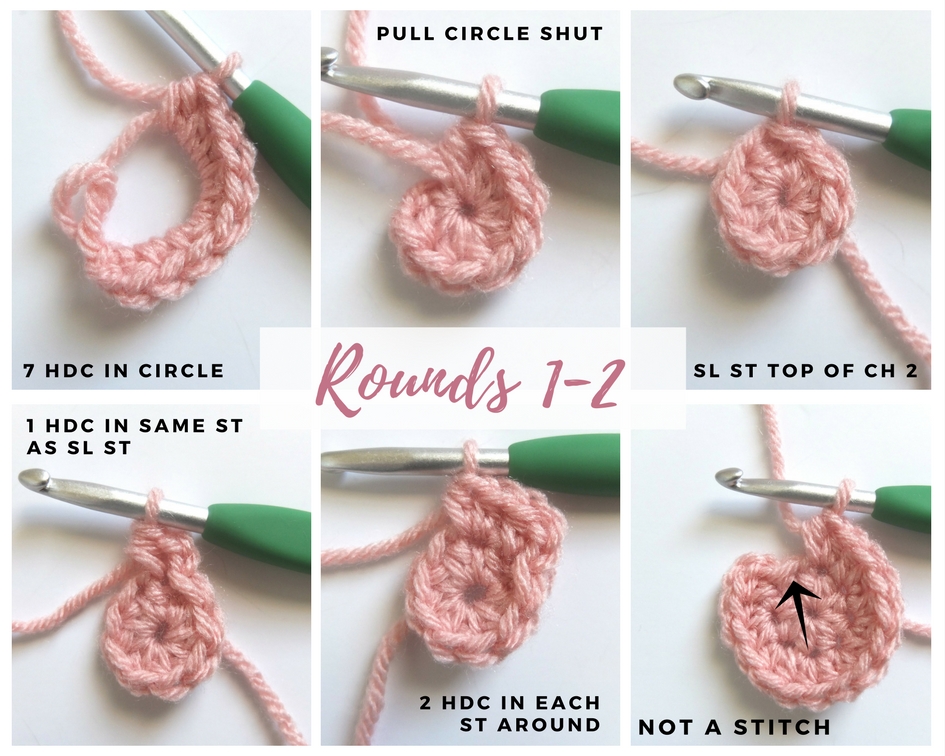
How to crochet in the round simply means working in continuous circles instead of back-and-forth rows. After making your magic ring or a small starting chain joined into a circle, you place markers (a piece of contrasting yarn works perfectly) at the beginning of each round so you always know where you are.
Most projects increase by a set number of stitches each round so the circle stays flat. For example, six single crochets in the first round, then two single crochets in each stitch for the second round, and so on. Keep the increases evenly spaced and your circle will grow smoothly without ruffling or cupping.
Working in the round opens the door to toys, baskets, hats, and countless small gifts.
How to Crochet Hearts, How to Crochet a Heart, How to Crochet a Simple Heart, and How to Crochet Little Hearts
Nothing is more charming than a small handmade heart. Learning how to crochet hearts (or how to crochet a heart, how to crochet a simple heart, and how to crochet little hearts) is surprisingly easy once you know single crochet and a little shaping.
A very simple little heart pattern:
- Magic ring, 6 single crochets into the ring.
- Round 2: 2 single crochets in each stitch (12 stitches).
- Round 3: 1 single crochet, 2 single crochets in next stitch repeat around (18 stitches).
- Next rows: work a few rounds even, then begin decreasing to form the two bumps of the heart.
- Finish by sewing the top closed or leaving a small opening if you want to stuff it lightly.
Make them in soft pastel colours and they become perfect gift tags, keychains, or decorations for a baby blanket. Once you can make one, you can make dozens in an evening while watching a film.

Crochet How to Change Colors
Sooner or later you will want more than one colour. Crochet how to change colors is simple once you know the timing.
Work the last stitch of the old colour until you have two loops left on the hook. Drop the old yarn, pick up the new colour, and pull it through those two loops to complete the stitch. Continue with the new colour. Leave tails long enough to weave in later (about 10–15 cm).
For neat colour changes in the round, change at the end of the round and carry the unused yarn up the inside if the distance is short. Practise on a small swatch until the joins look clean. Changing colours is what turns a plain baby blanket into something special or lets you create striped hearts and cheerful coasters.
 Clean Color Change Between Rounds — Crafty Tibbles
How to Crochet a Baby Blanket
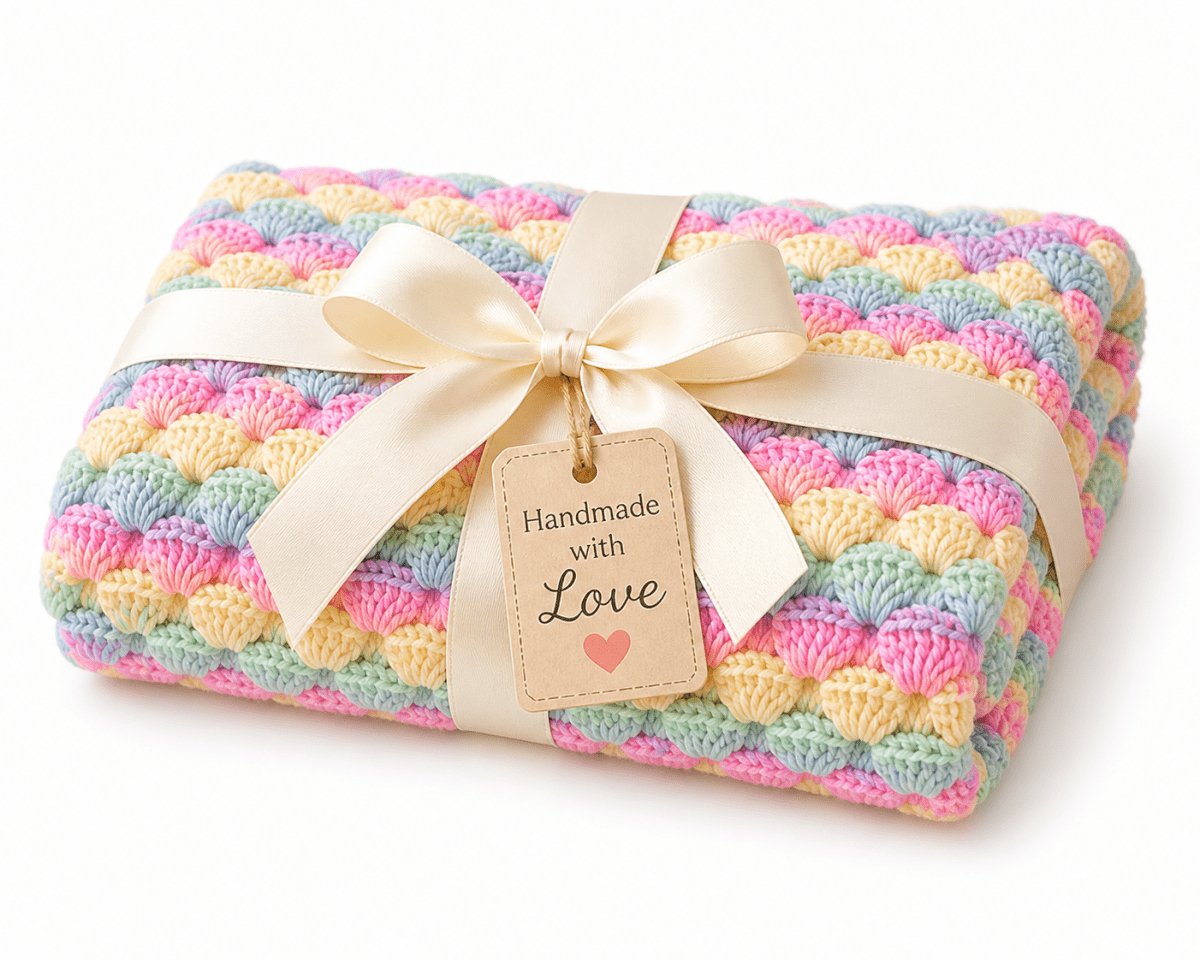
Now that you know the basic stitches, you can make something truly useful: a soft baby blanket. How to crochet a baby blanket does not require complicated patterns. A simple rectangle worked in half double crochet or double crochet is perfect for beginners and looks professional.
Choose a soft, washable yarn suitable for babies (many European brands offer certified options). Chain enough stitches for the width you want – roughly 80–100 cm is a good starting size. Work rows of half double crochet until the blanket is square or slightly longer. Add a simple single-crochet border in a contrasting colour if you like.
The beauty of a handmade baby blanket is that every stitch carries the quiet intention of care. It becomes a keepsake that travels from the pram to the toddler bed and, years later, into a memory box.
Final Thoughts and Gentle Encouragement
Learning how to crochet is not about becoming perfect overnight. It is about the small daily pleasure of making something with your own hands. Some days your tension will be too tight. Some days a heart will come out lopsided. That is completely normal. Every experienced crocheter still has moments like that.
Keep your first projects small – a chain, a few rows of single crochet, a little heart. Celebrate each finished piece. Store your work-in-progress in a pretty basket so it invites you back. And if you ever feel stuck, put the hook down, make a cup of tea, and come back later with fresh eyes.
Whether you live in a busy city apartment or a quiet countryside house, crochet fits into the rhythm of ordinary European life. It asks only for a little time and attention, and in return it gives you soft fabric, quiet satisfaction, and the ability to make gifts that no shop can match.
So pick up that hook. Make your first chain. And enjoy the gentle, slow process of turning a simple strand of yarn into something beautiful. You already have everything you need.


0 Comments